Much talk these days with respect to ailing state-owned enterprises (SOEs). new terminology has also been created as state-owned business enterprises (SOBEs) and strategic state-owned business enterprises (SSOBEs).
There was a good and bad of this system. The good being establishment of many new state-owned manufacturing industries substituting imported products which was the correct move.
The bad being profitable business organization privately owned and managed being taken over and converted into state-owned enterprises.
In addition to the existing staff of the businesses taken over state employees with qualifications and experience were appointed at the start of these ventures and were managed professionally.
As time went on they became employment bases for political stooges and recruitment of unqualified employees/managers to these organizations over and above cadre requirements was considered a political right of politicians. A move claimed by the government to solve unemployment.
Most state organization was turned into government-managed and funded organization being supported by funds from the state becoming a burden to governments as well as taxpaying citizens of the country.
State employees being exempted from tax increases the burden on the state
Based on the currently available data there are 422 state-owned enterprises contributing to 13% of GDP. The exact number of SOEs is; however, open to question for different reasons including legal definition. Of these 422, 54 have been classified as strategic state-owned business enterprises SSOBEs.
The total asset base of these amounts to approximately Rs 7.6 trillion, which is 57% of GDP, as per a recent statement by the ministry of finance / central bank.
Most SOE / SOBE / SSOBE are a burden to the people of this country
17 SSOBEs make an aggregate loss, which outnumbered profits made mainly by state-owned banks, non-bank financial institutions and trust funds. The biggest losses were reported by petroleum corporation CPC, CEB.
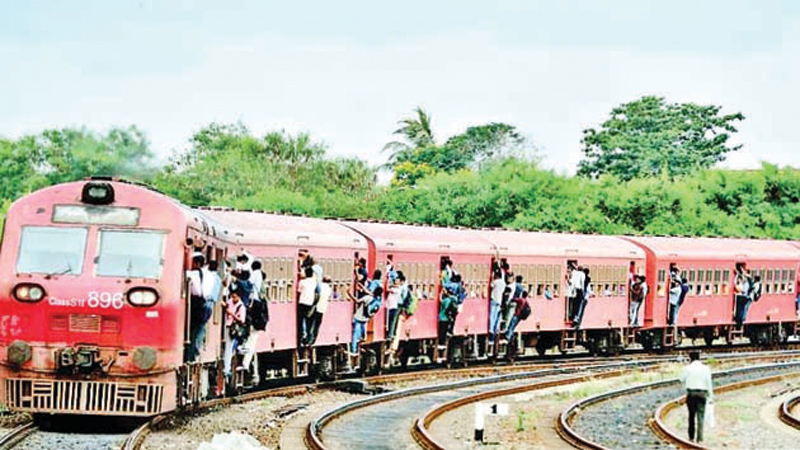
SriLankan airlines, Water Board, Sri Lanka Railways are being run to the ground by political aspirations burdening the public. The railway moves only 7% of the travelling public 93% of travelling public subsidies railway. A 20% price increase on a ticket will make the railway break even. Government has no political guts to do so. The government has also collected income from levies and dividends from the few profit-making SOEs.
These losses are a burden to all citizens of this country irrespective of social status and all heads should be focused on making the loss-making SOEs profitable or at least break even. The size of SOEs and their activity make them an important determinant of the overall economy of the country.
State investment/management contribution to these SOEs become extremely difficult due to inherent problems
Governments are managed by politicians educated / uneducated. Politicians are capable of making only political decisions, not economic ones. These decisions are focused on short term publicity and benefits to individuals, ignoring long term consequences to the country.
Government and politicians use funds of the public to keep these SOEs functioning and public funds are at great risk to citizens for no fault of theirs. the management and politicians face no risk and the government will keep on pumping public money to keep them afloat for political reasons.
Politicians refrain from making productive management decisions and risk personal unpopularity by making it a reason for these SOEs to be a burden to the public mostly due to political interference and mismanagement inefficiency which will be a burden to the public forever ever.
SOE’s which are monopolies, such as Ceylon Electricity Board, Ceylon Petroleum to a great extent if not for IOC, water bored just to name a few are strategic state-owned enterprises SSOBEs are draining the blood of the public mostly due to overstaffing, mismanagement and political interference and do not deliver an adequate level of service or charge excessive prices and are lower in productivity/efficiency.
SriLankan Airlines is a good example which was an entity managed by emirates at a profit. the state takes over once again made SriLankan back in the dump within 12 months to loss-making by inefficient management.
CEB is a mafia that cannot be made efficient unless private power production/supply is permitted in the country.
SLT efficient management
Sri Lanka Telecom is another example of efficient management.
Competition by the private sector has made them be efficient and face challenges. ports authority is another classic example of overstaffing and inefficiency privately managed terminals are more efficient and cost-effective. Unions of ports help to maintain inefficiency to cover political mismanagement by opposing private investment in ports
It is high time governments learn that increasing employment in the state sector cannot solve unemployment of the country but add burdens to the already overtaxed public.
The government is yet to bring to the notice of the pubic who are eventually owners of these SOEs by publishing audited accounts as a public document then the public will be made aware what SOEs are efficiently managed and profitable
The shortest, easiest method to solve this age-old problem is to convert all these SOEs to limited liability companies (ltd). List all SOEs, SOBEs, SSOBEs in the stock market keeping 35% or 50% or 51% stake with GoSL.
Management must be handed over to shareholders to appoint educated, efficient professionals selected by a board of directors comprising of 5, 7, not more than 9 directors of repute with proven track records.
Of the many SOEs has any pundit done a study on the cost of employment? A simple exercise is the total cost of employment divided by the number of employees. What is the turnover per employee? profit loss per employee? This will indicate the efficiency of all SOEs.
Peopolization of SOEs was done very successfully from 1990 – to 1994.
Listing all these units in the stock exchange is a very simple exercise. The method applied was government valuer do a financial / asset valuation. Determine the value per share.
Suggest to GoSL the issue price per share. Release 10% of shares to staff calculating the number of days worked during the period of service of the 90% shares still held by the government of Sri Lanka.
List 35% shares CSE
Listing 35% shares in Colombo Stock Exchange is a good option.
GoSL still holds 55% share and can appoint directors etc but they are answerable to public shareholders. GoSL will get funds from listing as well as dividends and Sec to Treasury will have no headaches in releasing money to pay salaries and maintenance of dead SOEs.