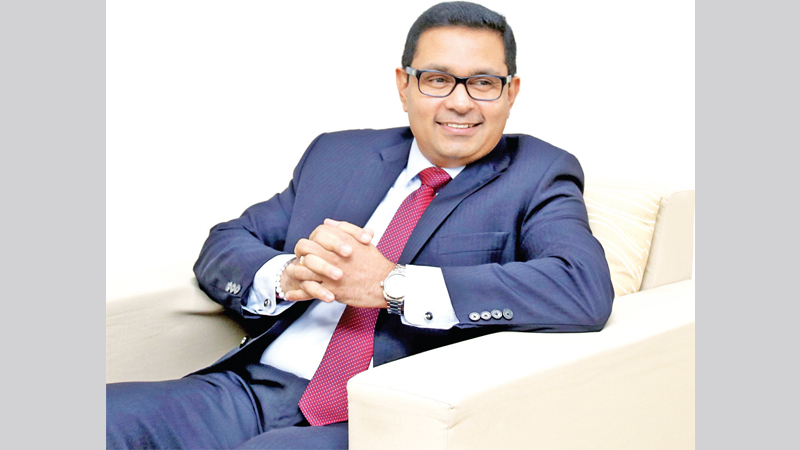
Domestic Systemically Important Banks (D-SIBs) are integral to the economic stability of the country. In an exclusive interview with the Daily News Business, Commercial Bank’s Managing Director and CEO Sanath Manatunge explains how the Bank plans to continue its role of facilitating exports, imports and remittances, its lending to key sectors including SMEs and shareholder value creation, while meeting all its statutory and governance obligations in the face of the challenges faced by the Sri Lankan economy.
Excerpts:
Q: The Central Bank has designated Commercial Bank as a domestic systemically important bank. What does this mean?
A: According to the criteria established in 2019 by the Central Bank of Sri Lanka, Domestic Systemically Important Banks or D-SIBs are banks whose failure will have a substantial impact on the financial system due to their size, interconnectedness, lack of substitutability and complexity. The assessment for D-SIBs covers 12 principles, including total exposure, intra-financial system assets, intra-financial system liabilities, securities outstanding, assets under custody, trading volume, payments activity, notional amount of derivatives, level 2 assets as reported under Liquidity Coverage Ratio, cross-jurisdictional liabilities, cross-jurisdictional claims and trading and available for sale securities.
Commercial Bank of Ceylon is in fact categorised as a D-SIB under what is known as “Bucket 2” which is the highest bucket for banks in the country and is the only private sector bank so classified.
Q: Does this designation place extra obligations or pressure on the Bank at times like this?
A: Yes, it does. As a Bucket 2 Domestic Systemically Important Bank, Commercial Bank is required to maintain a higher loss absorbency ratio, or HLA, of 1.5. HLA is Common Equity Tier 1 or CETI capital as a percentage of risk-weighted assets. CETI includes liquid bank holdings such as cash and stock. Before the global pandemic, Commercial Bank was required to maintain minimum Tier 1 and Total Capital Ratios of 10.00 % and 14.00% respectively. However, these minimum ratios were brought down to 9.00% and 13.00% respectively due to the adverse impacts of the Covid-19 pandemic. The capital surcharge of 1.5% on D-DIBs represents an additional requirement for Commercial Bank as we have to maintain a higher capital adequacy ratio, while maintaining required StatutoryLiquidity Assets (SLA) ratio, liquidity coverage ratio and net stable funding ratio. This in addition to the pressures affecting all banks, especially in the backdrop of the current adverse economic conditions faced by the country, including the shortage of foreign currency, very high interest rates, depreciation of the Sri Lanka Rupee against the Dollar, the sharp rise in inflation and the impact of increased taxes. We are however confident that the bank has the financial strength to fulfil all the requirements of a D-SIB, and to play its pivotal role in the national economy.
Q: What has the bank done to ensure it can continue to support the national economy amidst the challenges?
A: As a Domestic Systemically Important Bank, we have been a driving force in partnering and cooperating with national economic development efforts and playing a significant role in the post-pandemic recovery process. This includes granting working capital loans and providing concessions to affected sectors, even beyond the mandated debt moratorium measures and initiating our own COVID-19 financial relief programmes, especially the two separate bank-funded loan schemes for pandemic affected SMEs and micro enterprises.
Between 2020 and 2021, we had extended 49,566 moratorium facilities to a cumulative value of Rs. 217 billion to affected customers. Furthermore, 25% of the total portfolio of advances that came out of the moratorium were restructured through proactive communications and close monitoring by our staff.
We were also able to maintain our net non-performing loan ratio at a low level of 1.44%, which reflects the high asset quality maintained by the Bank and the success of the initiatives implemented to help our customers tide over the difficult times.
Additionally, Commercial Bank was the largest lender to the SME segment in 2020/21 among all state-owned, private and specialised banks in the country. This is a significant achievement as the SME sector forms the backbone of the Sri Lankan economy, accounting for nearly 80% of all businesses and is a main source of employment generation, covering over 35% of jobs in the country.
Q: How can the bank continue to play its role as a major facilitator of exports and imports with the dollar crisis unresolved?
A: Despite the current economic climate in the country, we manage our trade flows in an effective manner by accommodating import transactions based on the projected inflows of exchange and understanding the business needs of our clientele. In consideration of the national interest, priority is given to essential commodity imports. We also encourage importers to contract with us for longer tenor periods, facilitate trade deals to arrange foreign exchange and coordinate with various Development Finance Institutions such as the Asian Development Bank, International Finance Corporation, India Exim Bank and the Saudi Exim Bank. This enables us to provide guarantees and create confidence among foreign correspondents to handle letter of credit confirmations.
Further, borrowing under bilateral and multilateral foreign exchange agreements from institutions like the Commonwealth Development Corporation have helped to fund our trade commitment at maturity. Treasury loans were obtained against trade receivables and future commitments, which provides the necessary strength to sustain trade business. We have also encouraged exporters to explore new ventures in business process outsourcing (BPOs), agriculture-based exports, the apparel and garments sectors to earn much needed foreign exchange in this crisis situation. A larger export market share of over 16% and regular export earnings has enabled the Bank to finance import bills despite the unresolved foreign exchange crisis.
We facilitate importers utilising the Indian credit line by providing necessary guidance and instructions. Use of innovative advance trade tools such as irrevocable reimbursement undertaking, bill avalisation, reimbursement authority financingand acceptance financing help importers to resist any disruption. In addition, we organise trade awareness programmes to educate importers and exporters to find new avenues of doing business and learn of remedial actions to address macroeconomic challenges.
The expertise and experience of our trade staff contribute towards the smooth flow of transactions while conforming to internal and external procedures and regulations. These initiatives introduced and implemented by the bank help importers and exporters to sustain their business activities and be resilient in the market.
Q: How does the bank plan to maintain its support to the SME sector?
A: The Bank has already taken some important strides that is revolutionizing our approach to the SME sector. Our effort to have a fresh strategy forthe SME segment was initiated with a diagnostic study and a comprehensive transformation project conducted by a top global consultancy firm. While over the past several years the Bank’s growth in the SME sector has been steady, we felt a novel approach was needed to cater to the evolving demands of SMEs and to increase our portfolio.
The Bank prioritised a data-driven approach, taking a microscopic look at our portfolio for insights on growing our existing relationships as well as targeting new customers by sector and region. From this central point, leads were generated and then disseminated to the branches to take them forward. These are aimed at understanding the customer needs and experiencing loan sanctioning in a speedier manner.
Commercial Bank already offers state-of-the-art Digital Banking services to customers, together with a host of services for their convenience. The Bank also has a plethora of technology offerings inclusive of digital banking services, catering especially to the SME segment. These include Internet Payment Gateway Services; QR Code based payment solutions, Point-of-Sale solutions catering to smaller businesses, specially designed internet-based payment solutions for SMEs such as “ComBank Simple Pay” and salary payment packages such as our Paymaster app.
Having seen the need for a platform where the SME sector could be recognised and catered to further, we formed such a platform named the ‘ComBank Biz Club.” It is a platform that focuses on bringing SME customers together in order to create new business opportunities and to provide them support beyond lending. Four tiers of membership – Premier, Platinum, Gold and Silver – were created to enable the Bank to identify and support the specific requirements of different SME customers. The Bank has also introduced a new loan scheme named ‘Biz Loans for SMEs’ which is a dedicated product to meet financial requirements of Biz Club members.
Additionally, we conduct our own capacity building Programmes and jointly conduct Financial Literacy Programmes with the Central Bank. The Bank has successfully conducted skill development/financial literacy programmes for over 11,000 entrepreneurs over a period of nineyears. We maintain a very close rapport with institutions such as the EDB, IDB, SEA, CEA and the ITI in order to extend necessary support for this sector.
We are also currently focusing on supply chain financing, where the suppliers of our corporate clients, who are generally SMEs, could be financed based on their cash flows.
Q: What can the bank do to attract more remittances to the country?
A: Many Sri Lankans who send remittances using informal channels do not understand certain risks involved in such transfers. The Bank is making a concerted effort to educate our migrant workers by publishing messages and videos on social media platforms and making use of our Bank representatives based in overseas markets to educate Sri Lankans not to be influenced by promised short term benefits due to the high risk involved in informal transfers.
The Bank has also introduced an informative remittance App under the brand name “ComBank RemitPlus” which is another initiative to promote remittances to the country. This is a trilingual app where any stakeholder can download and get information about formal Remittance channels, especially our remittance partners located worldwide along with their FX rates, locations and many other services.The RemitPlus app is also integrated with several apps of our overseas partners to facilitate a smoother service to our customers.The main objective of this initiative is to generate wider awareness among Sri Lankan migrant workers and educate them about ways and means of remitting money to Sri Lanka which can be performed on a very secure, convenient and real-time basis. In addition, the Bank has set up a Remittance Processing Centre which operates around the clock, 365 days of the year to serve this important segment. We have also opened a counter at the Department of Immigration and Emigration to provide support to Sri Lankans planning to travel overseas.
We have introduced many other unique products to this segment such as the Remittance account, where seasonal discounts and low value emergency loans are being offered to our loyal remittance beneficiaries.The latest products that we have introduced to serve this market are the “Forex Plus” Fixed Deposit scheme and “Arunalu” Foreign Currency Minors Account with the intention of increasing the inflows of foreign currency to the country. Our representatives based in main overseas markets support Sri Lankan workers in banking-related services and we have organised eForums to virtually connect with our remittance partners and Sri Lankan professionals in the main remittance markets to promote investments and high value deposits to the Bank. This will stimulate remittance of foreign currency to the country.
Q: What role can the Bank’s governance policies and sustainable business practices play in these challenging times?
A: The Bank’s governance policies support the Central Bank’s initiatives to stabilise economic fundamentals in areas such as export business, remittances and support to SMEs. Despite the difficult times, the Bank will not compromise on governance for short term gain. As a responsible Bank that has supported the country for over a century, we will continue to prioritise long term strategies that will support the local economy.
On the other hand, in keeping with our ethos of creating value and convenience for our customers, we will continue our empathetic stance towards customer support and solutions with a special focus on struggling export businesses and SMEs that contribute towards the economy.
Furthermore, the Bank’s Social and Environmental Management System (SEMS) implemented with the support of the International Finance Corporation (IFC) enables us to assess and manage social and environmental risks systematically and ensures we lend to environmentally sustainable, socially acceptable and economically viable projects.
Our relentless efforts in digitising banking practices too will benefit the country in the long run.
Q: Given the challenges, how does the Bank achieve shareholder value creation?
A: The Bank has continued to demonstrate remarkable operating resilience throughout the pandemic through customer focus, digital engagement and operational excellence. The results reflect our strong ability to maintain healthy and balanced growth in core banking operations to mitigate the impacts of fluctuations in income.
Each quarter, we have been maintaining or improving on our key performance ratios to become even more financially stable and better positioned to continue our mission as a systemically important bank.
Our consistent commitment to ethical compliance, risk management, the environment and the community, we believe, will continue to position us an attractive and responsible entity in the eyes of our existing and potential shareholders.
Some of the initiatives through which we create value for our shareholders include rebalancing the Bank’s portfolio to be more sustainable from a risk perspective, protecting and growing the capital base, expanding to overseas operations, digitalization, analytics and IT initiatives to improve efficiencies, investments in key sustainability initiatives that have resulted in becoming a ‘Net Zero’ bank and devising frameworks for increasing shareholder engagement.
Our overseas operations, especially Bangladesh and the Maldives, give us a definite competitive advantage to provide an enhanced value to our shareholders as well as the country.