


Implementation of structural reforms vital for SL to reset its course – World Bank

Sri Lanka’s heightened fiscal, external, and financial sector imbalances and its fluid political situation pose significant uncertainty for the country’s economic outlook, says the World Bank in its twice-a-year update, underscoring the need to address the root causes of the country’s economic crisis and build a strong and resilient economy to prevent future crises.
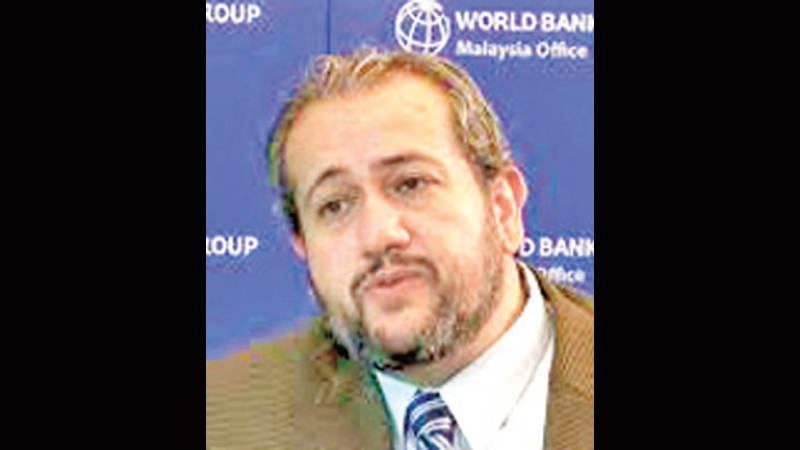
Released on Tuesday the Sri Lanka Development Update (SLDU), Time to Reset projects the country’s economy to contract by 4.3% in 2023, as demand continues to be subdued, job and income losses intensify, and supply-side constraints adversely affect production. “The economic crisis in Sri Lanka has had deep impacts with over half a million jobs lost and 2.7 million additional people falling into poverty between 2021 and 2022,” said Faris H. Hadad-Zervos, World Bank Country Director for Maldives, Nepal, and Sri Lanka.
“The prolonged recovery from the scarring effects of this crisis in addition to a slow debt restructuring process, limited external financing support, and an uncertain global environment pose significant risks to the country’s economic growth.”
The economy will continue to face significant challenges in 2023 and beyond. A lower-level external trade equilibrium could have contagion effects on domestic trade, economic activity, jobs and incomes. Combined with adverse effects from revenue-mobilization efforts, which are essential for regaining fiscal sustainability, poverty projections could worsen. The financial sector needs to be managed carefully, given rising non-performing loans and large public sector exposures.
Mitigating the impacts on the poor and vulnerable remains critical during the adjustment. Reducing poverty requires better-targeted social assistance, an expansion of employment in industry and services, and a recovery in the real value of incomes. However, strong and effective implementation of the government’s reform program, supported by financing from international partners, could boost confidence and attract fresh capital inflows that are key to improve job prospects and restore livelihoods.
“The current crisis is not a temporary liquidity shock that can be resolved by external financing support from outside. Instead, the crisis provides a unique opportunity to implement deep and permanent structural reforms that may be difficult in normal circumstances,” added Hadad-Zervos. “Sri Lanka can use this opportunity to build a strong and resilient economy.”
The SLDU projects regional growth to average 5.6% in 2023, a slight downward revision from the October 2022 forecast. Growth is expected to remain moderate at 5.9% in 2024, following an initial post-pandemic recovery of 8.2% in 2021.