


India and Nepal increase cooperation in Hydropower
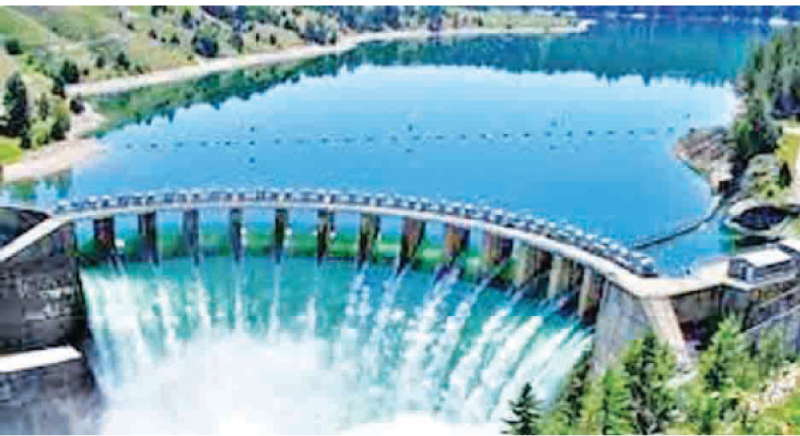

India and Nepal could play a very crucial role in Energy Cooperation in South Asia to promote sustainable economic prosperity and foster mutually beneficial energy linkages in the region. This is possible because Nepal has a very high level of hydropower potential whereas India has the expertise, experience, resources and willingness to cooperate.
The technical and economically feasible hydropower potential of Nepal has been estimated at 83,000 and 42,000 Megawatts (MW).
Nepal’s big (4) river and some southern river basins have a total hydropower potential of 72,450 MW theoretically comprising 18,750 MW of Kosi river basin, 17,950 MW of Gandak, 28,840 MW of Karnali (Ghaghra), 3,840 MW of Mahakali (Sarda) and 3,070 MW of other southern rivers. But despite this, according to Nepal Electricity Authority,
Nepal’s electricity production capacity has reached only 2,577.48 MW. Of the total installed capacity, about 2,492.95 MW is connected to the national power grid and the remaining 24.53 MW is off-grid supply.
The share of hydropower in the total generation capacity of Nepal is still far less than the potential and it is felt that with the current pace of development; it would not be able to realize the target of 7,300 MW of generation capacity by 2025.
The sign of the willingness to jack up cooperation in the hydroelectric power of both countries is now clear since they entered into a fresh agreement last year for the West Seti and Seti River projects.
Nepal could seek cooperation for developing its hydropower at a greater scale for both domestic supplies as well as exports.
India has the 5th biggest hydroelectric power generation capacity in the world. It had created an installed utility-scale hydropower capacity of 46,000 MW as of March 2020.
It has an additional generation capacity of 4,683 MW from small hydropower units. India’s own hydroelectric potential is estimated at 148,700 MW at a 60% load factor. India produces about 160 TWh (excluding small hydro) with an average capacity factor of 38.71%.
If India and Nepal cooperate in Hydropower production, they could not only fill the gap in their domestic power demand and supply but also help the other South Asian countries to overcome power shortages.
It is amazing information for anybody that Nepal has over 6000 rivers and rivulets across the country and has a steep topography suitable for hydropower generation.