


Integrating Gen Z into society to build a responsible future
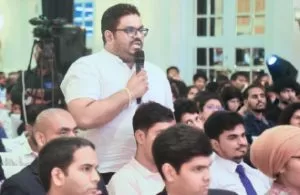
President Ranil Wickremesinghe expressed his goal of integrating the Gen Z generation into society and empowering them to take responsibility for the country’s development. He believes this will allow Sri Lanka’s youth to shape the society they envision for themselves.
The President emphasised that, like in other countries, Sri Lanka’s youth should be given the opportunity to influence the country’s future. He acknowledged that Sri Lanka had once been ahead of many developed nations, but has since fallen behind due to traditional politics and misleading slogans.
President Wickremesinghe also highlighted the importance of maintaining the economic stability achieved over the past two years. He warned that without continued efforts, the economy could collapse again. To secure the future of the country and its youth, he stated that he needs the next five years to make crucial decisions.
President Wickremesinghe addressed these points on Monday (9) during the #AskRanil youth meeting held at the Galle Face Hotel, Colombo.
In response to a question, the President clarified that reports suggesting the Cabinet has not approved the salary increase planned for 2025 are incorrect; the approval has already been granted.
Below are the questions posed by the youth and the answers provided by the President:
Q:Your policy statement references a ‘Theravada Trade Economy’. Could you explain?
A: It’s important to clarify that this isn’t a policy statement but rather a programme that can be put into action immediately. Many aspects of the programme can be implemented starting September 22, while others involve policies rather than specific actions.
The term ‘Theravada Trade Economy’ refers to a mercantile system grounded in Theravada Buddhism. The teachings of the Buddha are open and trade-oriented. Historically, trading was governed by the old caste system, but the Buddha’s teachings significantly influenced and expanded trade practices globally. The Buddha’s message, first introduced to Sri Lanka by the Tapassu and Bhalluka traders, has had a lasting impact on trade.
In 2019, our GDP was US$ 89 billion. My goal is to increase it to between US$ 350 and US$ 400 billion by 2025. Even if we are no longer here, we are committed to laying the foundation for you to build a prosperous and resilient state.
Q:What is your plan for the youth?
A: My plan is to empower the Gen Z generation to take responsibility for building the future they want, by integrating them into society. They must determine the future they desire. When I was around 20, we faced issues under the leadership of Mrs. Sirimavo Bandaranaike. We worked with President J.R. Jayewardene, and when he became President, he told us to shape society the way we wanted. He opened up the economy and initiated the Mahaweli project.
My focus is on creating a society where people can live peacefully, overcoming the crises of the past two years, and also improving the country’s economy.
Q: Election monitoring organisations have reported that the Cabinet has not approved an increase in government employees’ salaries. Is this true?
A: It should be noted that the Cabinet has indeed made a decision regarding salary increases. The role of election observers in this matter is unclear, and questions may arise about whether their involvement is independent or politically motivated. The decision to raise salaries was made some time ago in response to various requests. To address this, Udaya R. Seneviratne was appointed to lead a committee, and we are now implementing the committee’s recommendations.
Q:Your policy statement talks about a 4,000-acre investment zone in Hambantota. Could you explain?
A: We have the opportunity to bring modern industries into Sri Lanka by creating well-equipped investment zones. My aim is to establish large-scale investment zones. Initially, we started with the Katunayake and Biyagama zones, each covering around 400 acres. Now, we are planning much larger zones. The first new investment zone will be launched in Bingiriya, spanning 1,000 acres. We plan to establish such zones across the country.
In Jaffna, we are in the process of allocating 1,000 acres, and there are also 1,000 acres available in the Kappalthure area of Trincomalee, which can be expanded if needed. In Hambantota, we already have a harbour and an airport, so we need to take advantage of these facilities. The harbour should serve both imports and exports, and for this, 4,000 acres have been allocated. This land will also be used to develop a small city with residential facilities for people working in the investment zone.
Additionally, we plan to set aside about 10,000 acres from the Hambantota and Monaragala areas.
Q: As Gen Z, why should we choose you as the next President?
A: I have taken charge of this country and stabilised the daily lives of the people. There are still issues like rising prices, but economic stability must be ensured. Without it, the economy will collapse, and we’ll return to the same situation as before. Securing stability is crucial to your future, which is why the next five years are essential. But stability alone is not enough – how will we generate the foreign exchange we need? Our income is insufficient to cover our imports, and export revenue is inadequate. Only by expanding our export economy can we build a resilient financial system.
The other parties say they’ll reduce taxes, and I’d love to say the same. But how can we reduce taxes when our income is insufficient? The IMF has clearly stated that our economy cannot sustain further debt. Taking on more debt will lead to economic collapse. That’s why we’ve been advised not to borrow more, but for a while longer, we may have to take on some debt.

A member of the audience poses a question to the President.
We’ve agreed that any borrowing to cover the budget deficit should not exceed 5% of the GDP. We need to structure our budget accordingly, ensuring a primary surplus. If we don’t, we’ll face more problems. We can’t borrow from banks or print money either. The only way to strengthen the rupee is to follow this path. Unlike others who promise reduced taxes and increased spending, we must remain realistic.
Now, let’s consider the proposals by the NPP. Their expenditure plan exceeds Rs. 8,900 billion, with a revenue projection of Rs. 4,900 billion – Rs. 2,000 billion less than our plan. This creates a budget deficit of Rs. 4,000 billion, which equals 11.9% of the GDP. The difference is stark. While we aim for a primary surplus of 2.3%, they propose a deficit of 4.3%. This will push the country toward collapse again. If we go to the markets without sufficient funds, interest rates will soar to 25%. If we proceed this way, the IMF will withhold the next tranche, leading to another economic crash. The dollar could rise to Rs. 400, and if the IMF cuts us off, the exchange rate could reach Rs. 500. Is this the path we want to take?
Q: Your policy statement mentions expanding the digital economy from US$ 5 billion to US$ 15 billion. How do you plan to achieve this?
A: I firmly believe it’s achievable. The public sector will continue to gain experience in digitalisation, and we aim to expand this to US$ 15 billion. We are also fostering entrepreneurship in this space and attracting foreign investors to support this growth. The rest will need to be driven by the industry itself.
Q: There are also a large number of unemployed graduates in the Arts fields. Is there a solution for them?
A: Our focus is on modernising agriculture, setting up factories, and reviving the tourism industry to create more jobs. We’ve created opportunities for investors to expand businesses, and existing businesses also need room to grow. Youth haven’t found jobs in the past four years, and until new investments are realized, we need to offer some relief. This is why we’re focused on providing government jobs, private sector employment, and self-employment opportunities. For private sector jobs, we’ll subsidize wages for the first year. For self-employment, we’ll provide loans and support for about a year. We are also enhancing qualifications in English and IT for arts graduates to improve their employability, thus reducing unemployment.
Q: Does your programme include a plan for young people to integrate with agriculture through technology?
A: Yes. Under the agricultural modernisation programme, we are converting existing agricultural service centres into agri-innovation hubs. This will be a joint effort between the government and the private sector.
The post Integrating Gen Z into society to build a responsible future appeared first on DailyNews.