


India to be world leader in clean energy

The first-ever climate change assessment report drawn up in 2020 indicates that the temperature is poised to rise in India by 4.4 degrees Celsius by the end of 2100. But as far as India is concerned, there is a unique potential for change with ambitious programmes to reduce carbon footprint. India is home to a large volume of nearly 20% of the global population.
The political hierarchy is looking at ways and means of reducing heat entrapping effectively amidst fast-growing infrastructure and energy generating systems with the population growth.
These efforts are of significant importance to India, globally being the third-largest greenhouse gas emitter, immediately following China and the United States.
The United States and China have presented vigorous plans to achieve net-zero by 2050 and 2060.
India, a bigger economy in South Asia, was also under compulsion to draw up a road map to achieve its target in climate change performance. Soon it will become a battleground of the global clean energy transition. However, big economies performed poorly in the Climate Change Performance Index (CCPI) 2022. Nevertheless, India maintained its position without much of a problem and placed 10th in the CCPI index.
The German watch, along with Climate Action Network (CAN) and New Climate Institute, released the report on November 10 on the sidelines of the 26th session of the Conference of the Parties (CoP26) to the United Nations Framework Convention on Climate Change (UNFCCC).
Climate Change Performance Index
Germanwatch is a non-profit, non-governmental entity based in Bonn, Germany. It seeks to influence public policy on trade, the environment, and relations between countries in the industrialized north and underdeveloped south.
“As an independent monitoring tool, the CCPI has a leading role in providing information on the Paris Agreement’s implementation phase. The Climate Change Performance Index (CCPI) is a scoring system designed by the German environmental and development agency Germanwatch e.V. to enhance transparency in international climate politics. Based on standardized criteria, the index evaluates and compares the climate protection performance of 63 countries and the European Union, which are responsible for more than 90% of global greenhouse gas (GHG) emissions.
The first report of the Climate Change Performance Index came out to the public domain in 2005, and an updated version is presented at the UN Climate Change Conference annually. Germanwatch publishes the index in cooperation with the New Climate Institute and Climate Action Network International and with financial support from Barthel Foundation.
“The CCPI looks at four categories, with 14 indicators: Greenhouse gas emissions (40 per cent of the overall score), renewable energy (20 per cent), energy use (20 per cent) and climate policy (20 per cent).
India is very much on track to achieve its climate rating as targeted. The indications are that India accomplished a strong performance similar to last year. The report rated the performance ‘high’ in the GHG emissions, energy use and climate policy categories, and medium in renewable energy.
Hence India is already in the loop to meet its 2030 emissions target (which is compatible with a well-below-2°C scenario), close to achieving its Nationally Determined Contribution (NDC) target of a 40% share for non-fossil fuel installed power capacity by 2030. India is also on course for a targeted 33–35% reduction in energy intensity by the same year,” said the report.
According to a CCPI country expert, considerable improvement in renewable targets and the focus on NDC targets and implementation have contributed to India’s strong performance this year. India is on the right path to achieving all targets. India’s ambitious renewable energy policies, such as its targets of renewable electricity capacity of 450 GW and a 30% electric vehicle share by 2030, have also contributed.
Net Zero target
Indian Prime Minister Narendra Modi had earlier announced steps to reduce emissions and targeted 2070 as the year when the country could achieve the Net Zero target. The experts have, however, said no Indian state announced a clear coal phase-out; India has increased coal-driven power since the Paris Agreement in 2015.
Another expert of the CCPI team accepted that moves are underway to promote more electric vehicles in the transport sector and steps toward converting the country to clean energy.
Experts say India should set a Net Zero target for 2050 similar to the United States and leverage its domestic success on renewables and emissions intensity into international initiatives.
More steps to strengthen policies on climate vulnerability, adaptation, and resilience-building are vital. Equity and social development should also feature more strongly in the energy transition,” the report said.
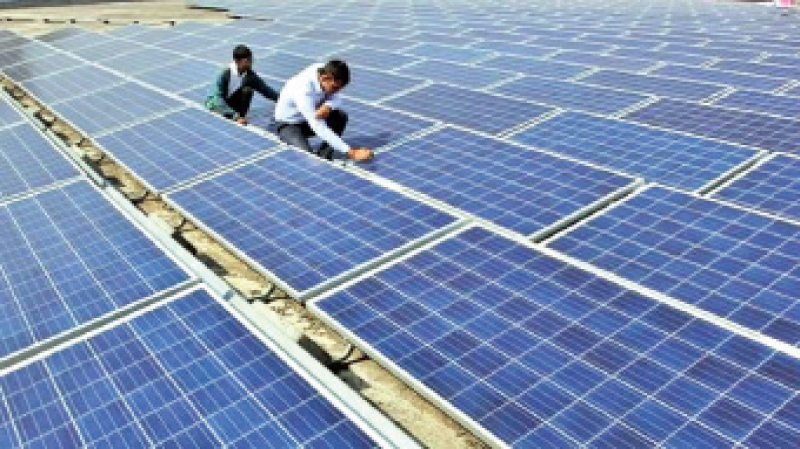
India is poised to become a world leader in the clean energy sector given its massive potential for solar energy development. It could create millions of jobs while replacing fossil fuels. It is one way of addressing the chronic air pollution crisis which compounds the climate issue.