

Central Bank duty-bound to depositors – Governor


CBSL Governor Nandalal Weerasinghe said the Central Bank is duty-bound to protect the interests of depositors in the financial system. He noted that there should be a clear demarcation between the responsibility of fiscal administration which falls under the purview of the treasury and monetary administration which should fall under the purview of the Central Bank.
He noted that under the proposed new framework there would be an emphasis on the demarcation of roles.
The powers over financial matters given under the constitution to parliament would remain untouched. The capacity of the Finance Minister to unilaterally deviate from the policy set out by the inflation target would be constrained by macro-prudential activity by the Central Bank and/or compensated for in the short term in terms of market interest rate behaviour.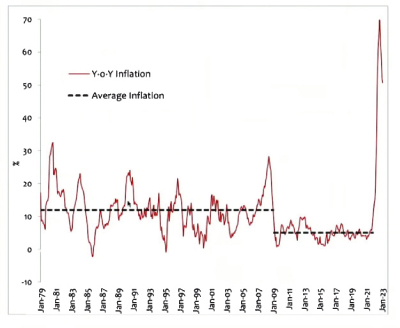
Weerasinghe was speaking recently at the Centre for Banking Studies on the coming new legal act establishing an inflation-targeting Central Bank regime.
Under the existing framework, the Monetary Board has on its board a member of the Treasury. This has resulted in conflicts of interest in the setting of monetary policy. The interests of the Treasury have usurped the powers of the Monetary Authority.
The Treasury’s representation on both the Monetary Board and the Securities and Exchange Commission (SEC) has resulted in restricted market access to government securities. Those entities have also acted to prevent the secondary trading of Corporate Debt Securities on the Colombo Stock Exchange.
Government treasuries are traded on separate systems within the banking sector and within proprietary systems through the Primary Dealer network. This has resulted in limited informational access and anomalous trading patterns with limited liquidity. Though there is no formal legal impediment to the listing of government securities on the exchange through means of moral suasion no market participant has ventured into doing so.
Weerasinghe said the new law would enlarge the Monetary Board thereby increasing the technical competence of the policy governing framework. The new act would also require that only qualified individuals are brought into the Monetary Board.
Weerasinghe acknowledged that there would be changes to the law as legal challenges and parliamentary processes take their course. He noted that over time there would be amendments to the law and it would be strengthened to ensure that unlike in the recent past, there would be a stable monetary policy for the functioning of the economy.
Weerasinghe referencing data compiled since 1979 notes that though cyclical the country has been following a broadly stable average rate of inflation of 11% before the war and a rate of around 8% after the war. He notes that this showed an implicit inflation target of the pre-existing monetary policy framework.
He however highlighted that under the recent ‘Modern Monetary Theory’ framework there had been an explosion in inflation. Fractures in the capital controls of the country were then exploited by speculative holders for the boom in the illicit market for foreign exchange.
Weerasinghe noted that this policy was not a policy that was foisted on the Sri Lankan polity by way of international powers but rather the same policy that was followed by international powers in their own frameworks. He said New Zealand was one of the initial countries to follow a flexible inflation-targeting approach and it has been the norm for most modern central banks. TP
Central Bank bill in accordance with the constitution
The Central Bank bill with minor changes shall be consistent with the constitution. The more ambitious reforms are still possible if the bill passes with a 2/3 majority within parliament. The Supreme Court upheld the distinction between monetary and fiscal policy and noted that an autonomous Central Bank as set out in the proposed framework is still answerable to Parliament.
The court noted in its judgement that the bill can be passed with a simple majority within parliament. However, the court has based on the equality of the government to other entities in the country deemed that the bill should allow for special arrangements to allow for Central Bank liquidity to be provided to the government. This was made public by the Supreme Court judgement released recently. This liquidity however will not be long-term indefinite financing as has been the case before. The judgement notes, ‘Such assistance shall be provided by the Central Bank only for a limited period, and the Government shall take immediate measures to remedy the situation.’
The new bill shall better balance the forces of market interest rates against the expenditure plans of the government hopefully creating a system whereby broad economic benefit hurdles are established for government spending. TP