

“Lanka’s economy showing signs of settling down”
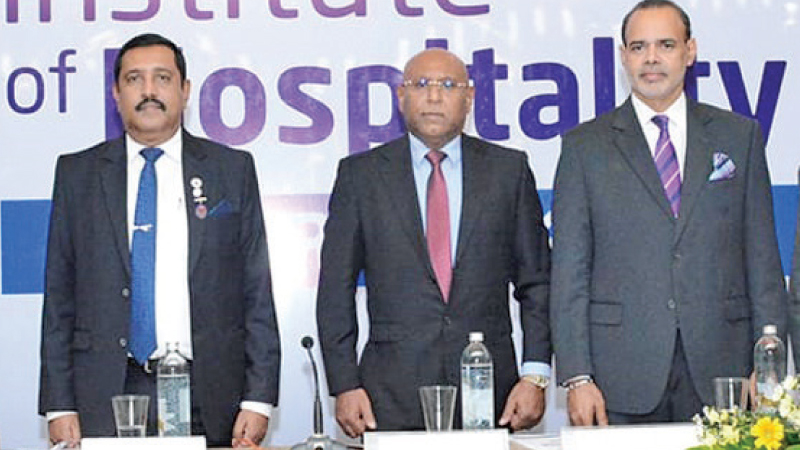

Sri Lanka’s economy is showing signs of settling down and this is a positive sentiment, said CEO, Director/ CEO of National Development Bank Dimantha Seneviratne, at the annual general meeting of Institute of Hospitality at Mont Blanc Hall, Mövenpick Hotel, Colombo on Tuesday.
Firstly the export (USD 10.5 billion) vs import gap (USD 22 billion) is reducing and the deficit which was around USD 10 Billion has come down to around 7 billion.
This gap which was earlier over USD 10 million was earlier compensated by foreign remittances that accounted to around USD 7 billion and tourism USD. 4.3 billion and other exports. Tourism attracted around USD 700 million revenue in the first quarter of 2023. Foreign remittances too are fast moving up after a huge slump due to bad economic decisions to hold the rupee. (This opened up a huge informal channel.)
“When Sri Lana declared bankruptcy the country’s reserve position was almost zero and today it is touching the USD 3 billion mark. The USD which was around Rs. 360 plus has also come down under Rs. 300 while inflation too is rapidly decreasing.
In addition we also see interest rates coming down which will result in the hotel sector restarting their refurbishments and other new investments. He also disclosed that Sri Lankan Tourism stakeholders owe the local banking sector around Rs. 550 billion as loans. Seneviratne said that this accumulates to around 5% of the total loan portfolio of the local banking system.
Seneviratne said that the tourism sector was progressing well accounting to around USD 4.3 billion annual revenue in 2019 until twin disasters, Easter Sunday attacks, C-19 pandemic struck and was followed by an economic and political crisis.
“During this time Sri Lankan regulators with the Central Bank executed a unique system of offering a debt moratorium which was extended several times. Today the banking sector has not been requested by the authorities to extend the moratorium as the banking sector may have some issues if they keep on extending the moratorium.
However NDB and several other banks are still extending this moratorium on a case by case basis mainly to the tourism sector as we see reemergence of the industry with additional arrivals and revenue picking up.”
He however said that new marketing techniques should be adopted and focus should be taken away from traditional markets such as Europe which are facing high interest rates, high inflation and negative economic impacts due to the Ukraine Russian conflict. Asia including China and India are moving towards being the economic ‘super powers’ in the future and more promotions should be focused towards these feeder markets.
At the 31st AGM Dr. Harsha Jayasinghe was re-elected for another term.