

President challenges Sajith, Anura to open discussion with IMF
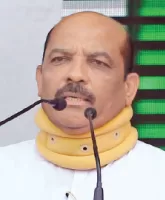
President Ranil Wickremesinghe speaking at the UNP convention at the party headquarters, Sirikotha, yesterday said, “Today, you have given me the opportunity to run as an Independent candidate in the upcoming Presidential Election. The proposal approved by the Executive Committee was ratified at this conference, and I want to thank you all for your support.
“The UNP was founded by D.S. Senanayake, who was committed to defending both a free Sri Lanka and its identity. On September 6, 1946, he declared that the primary duty of the UNP is to protect Sri Lanka. We should all think of ourselves not just as members of the UNP, but as Sri Lankans. If Sri Lanka fails, the UNP will also be at risk. This is the message we received from leaders such as Dudley Senanayake, J.R. Jayewardene, and Ranasinghe Premadasa. As a Sri Lankan, I accepted the role of Prime Minister and subsequently the Presidency to save this country.
“I took on these responsibilities because I witnessed the suffering of our people in gas, fuel, medicine, and food queues. When the people face such hardships, we must empathize with them and work to address these issues. Failing to do so would be a grave injustice. The Samagi Jana Balawegaya (SJB) and Janatha Vimukthi Peramuna (JVP) have also failed in this regard. However, together, we have protected the fundamental rights of the people.
“No one, including Sajith Premadasa, the leader of the SJB, has worked under President J.R. Jayewardene or President R. Premadasa. I was also responsible for bringing Sajith into the party, so their understanding of these issues is limited. They do not have the insight of leaders like D.S. Senanayake. Consequently, they chose to leave the party, which is not surprising. As members of the UNP, our priority is always the country’s welfare.
“In the 2020 election, the UNP’s policy statement highlighted the need for US$ 03 billion to address the economic crisis. Neither the SJB nor the JVP addressed this issue. We were defeated for speaking the truth, but we understood the gravity of the situation. I engaged with the World Bank and the Asian Development Bank, recognising that the problem could be resolved with the assistance of the International Monetary Fund.
“After Gotabaya Rajapaksa left the country, no one sought the Presidency. When I requested support, Sajith Premadasa, influenced by ‘Sattambhirala’, chose to back Dullas Alahapperuma. It is important to remember that when there was an attempt to impeach President Premadasa, I stepped in to support him. Yet these efforts seem to be forgotten. Throughout, I have consistently defended this party.
“During the 1971, the Janatha Vimukthi Peramuna (JVP) rebellion, then-President J.R. Jayewardene declared his support for the government, explaining that if the country were lost, nothing else would matter. Similarly, in 1989, when the JVP insurgency erupted again, then President Ranasinghe Premadasa invited the late Prime Minister Sirimavo Bandaranaike for discussions. She agreed to support the government, demonstrating a longstanding tradition of unity among political parties in times of crisis. When the late President Premadasa was assassinated, Sirimavo Bandaranaike assured me that her party would not nominate a candidate for President but would instead support someone from our party. Such customs of mutual support have long been a part of our political tradition, even though some may not be aware of this history.
“Facing the current challenges, I accepted the task of addressing these issues and assembled a dedicated team. Ranjith Siyambalapitiya and Shehan Semasinghe were appointed as State Ministers, and I collaborated with key Ministers including Ali Sabry, Kanchana Wijesekera and Dr. Bandula Gunawardhana. This collaborative effort proved successful.
“Additionally, I worked closely with R.H.S. Samaratunga, Nandalal Weerasinghe, and Mahinda Siriwardana, with Sagala Ratnayaka serving as my chief of staff. Contributions from Indrajit Coomaraswamy and Shantha Devaraj were also instrumental. Together, this team played a crucial role in stabilising and saving the country’s economy.
“Meanwhile, the Prime Minister took charge of Parliament, with significant support from Ministers. The task was challenging, but through collective effort, we managed to stabilise the country.
“We initiated a programme with the IMF and engaged in discussions with 18 countries, leading to agreements that have helped bring the country to its current state.
“During this period, we had to implement tax increases to boost government revenue. While we acknowledge the burden this placed on the people and are grateful for their endurance, we have worked to alleviate this pressure gradually, providing relief where possible.
“These concessions were made possible by strengthening the rupee. According to our agreement with the IMF, we have specific targets to meet, and it is crucial to adhere to these goals.
“However, the Opposition’s election manifesto promises reductions in the prices of goods and taxes. Lowering taxes would reduce government revenue, jeopardizing our ability to meet IMF targets and potentially leading to a return to the economic conditions of July 2022. Although I too wish to lower taxes, this must be achieved through a stronger rupee. We have already initiated a programme to this end. Despite the difficulties, it is essential to continue on this path, as short-term popular decisions may not serve the country’s long-term future.
“We must avoid repeating past mistakes. When former President Gotabaya Rajapaksa reduced taxes, despite the IMF’s clear stance against such cuts, the IMF subsequently withdrew its support.
“The terms of agreements with the IMF are non-negotiable; they do not change their conditions. A similar situation occurred in Greece, leading to a severe economic collapse – a scenario we are determined to avoid in Sri Lanka.
“Our current agreement ensures that we receive approximately US$ 700 million from the IMF, the Asian Development Bank, and the World Bank every six months. This funding will support us till January. The IMF is scheduled to return for further discussions in October.
“As the UNP, we affirm our commitment to advancing the current economic programme. However, both the Samagi Jana Balawegaya (SJB) and the Janatha Vimukthi Peramuna (JVP) have suggested revising the programme. If this occurs, the IMF may withhold funding for the coming year, potentially leading us back to previous economic challenges. Restarting discussions with the IMF could take two to three months, followed by an additional six weeks for approval by the IMF Board of Directors. It is impractical to go without financial support for six months.
“I urge the SJB and JVP to clarify how they plan to fund the country if taxes are reduced. How will cutting state revenues address the country’s economic issues? We must avoid jeopardizing the country with false promises. We plan to hold a discussion with the IMF using electronic technology, involving all three parties. We will record this discussion and present it to the public to ensure transparency regarding the IMF’s stance and our economic strategy.
“If you believe that this agreement with the IMF can be altered, then directly address the IMF and request such a change. Additionally, explain how you plan to generate the necessary income if the goals are not met. We need clear answers to these questions. If you have a viable plan, present it to the public transparently. We propose that representatives from all three parties come together to negotiate with the IMF and share the outcomes of those discussions with the nation. This will allow the public to discern the truth and any falsehoods. Afterward, if anyone is dissatisfied, they can express their concerns clearly.
UNP General Secretary Palitha Range Bandara said:
“Two years ago, Sri Lanka faced a severe crisis, with the nation crippled by shortages of fuel, food, gas, and medicine. The country descended into chaos, with widespread unrest leading to the burning of politicians’ homes. During this critical period, opposition groups, led by their leader, did not step forward to address the turmoil. Instead, they sought to exploit the disorder to gain power.
“Today, with 39 candidates running in the Presidential Election, it is evident that Ranil Wickremesinghe stands out as the leader with genuine leadership qualities.
“Ranil Wickremesinghe foresaw the looming economic crisis as early as 2022 and included solutions in the UNP’s 2020 General Election policy statement. His foresight and proactive measures in addressing the economic challenges showcase his exceptional vision.”
UNP National Secretary and former Minister Ravi Karunanayake said: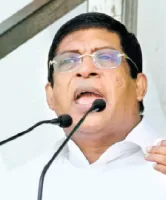
“In 27 days, the Presidential Election will be held to choose the ninth Executive President of this country. Twenty-five months ago, Sri Lanka was in a time of crisis, marked by long queues and a bankrupt economy, with power cuts lasting up to 13 hours. Those who are loudly criticizing today did not step forward to accept the challenge back then. However, President Ranil Wickremesinghe did. He took on the responsibility and created conditions where those affected could rebuild their lives.
“The UNP has always risen to meet the country’s challenges and has consistently worked for the benefit of the people. In 1948, the founder of the UNP, D.S. Senanayake led the country to independence from colonial rule. In 1977, J.R. Jayewardene ended the era of shortages and introduced the open economy to Sri Lanka, creating a more livable environment for its citizens. Similarly, in 2022, President Ranil Wickremesinghe successfully steered the country out of an economic crisis.”
UNP Asst. Leader/ Senior Advisor to the President, Akila Viraj Kariyawasam said: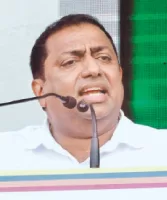
“In this year’s Presidential Election, President Ranil Wickremesinghe has secured support not only from the UNP’s allies but also from former rivals. A significant portion of the 6.9 million voters who previously backed former President Gotabaya Rajapaksa have now aligned themselves with President Wickremesinghe. There is broad recognition, even among opponents, that President Wickremesinghe has the capability to lead the country toward recovery.
“Some critics argue that President Wickremesinghe weakened their party and played a role in the defeat of the LTTE. These claims, however, inadvertently acknowledge his significant contribution to the war’s outcome. Others have accused him of assuming leadership to facilitate Namal Rajapaksa’s rise to power, but it has become clear that these accusations were baseless.
“Despite efforts to create separate power factions, the majority of the Sri Lanka Podujana Peramuna (SLPP) has united behind President Wickremesinghe. Many citizens are turning to him for leadership in navigating the country out of its current crisis.”
UNP National Organiser/ Chief of Staff to the President and Senior Advisor on National Security Sagala Ratnayaka 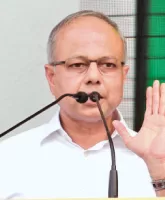 said:
said:
“UNP Leader President Ranil Wickremesinghe enters the Presidential Election as Independent Candidate. As the country faced severe collapse and other leaders claimed recovery was impossible, President Ranil Wickremesinghe emerged as the only leader capable (‘Puluwan’) of addressing the crisis. He successfully eliminated shortages of fuel, gas, food, and medicine, ensuring that basic needs were met and creating conditions for the people to thrive.
“At a time when Sri Lanka was unable to import goods, President Wickremesinghe’s economic policies have established a robust economy that now supports the import of all essential items except vehicles. Plans are in place to enable vehicle imports starting next year.
“The essential economic programmes required to ensure a prosperous life for the people have already been implemented. Additionally, the necessary decrees for economic modernisation have been passed by Parliament. He worked to reintroduce laws that had been neglected for decades into Parliament. While some leaders were hesitant to address these laws due to their unpopularity, President Ranil Wickremesinghe, prioritizing the nation’s welfare over personal politics, pushed for these essential economic reforms with the support of his team.”
UNP Deputy Leader/ President on Climate Change Ruwan Wijewardene said: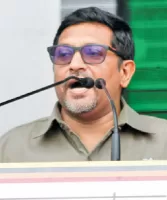
“The UNP is a prominent political party that has produced exceptional leaders for this country. The UNP has consistently embraced challenges, as history attests. D.S. Senanayake was instrumental in liberating the country from colonial rule. The first Executive President, J.R. Jayewardene ended the initial period of economic shortages. Ranasinghe Premadasa spearheaded the country’s industrial renaissance. More recently, two years ago President Ranil Wickremesinghe resolved the second era of shortages. Through these efforts, UNP leaders have significantly contributed to improving both the living standards and the economy of the nation.
Former Minister Manusha Nanayakkara said: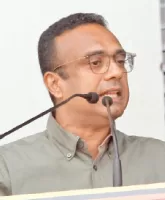
“In 2020, the UNP faced a decisive defeat, leading to the formation of the Samagi Jana Sandhanaya. Despite this setback, President Ranil Wickremesinghe made his way back to Parliament, buoyed by the votes the UNP garnered nationwide. However, the party’s defeat resulted in significant hardships for the people within just two years.
“Amidst these challenges, President Ranil Wickremesinghe was the only leader who stood for the people, undeterred by his own political defeat. During a time of widespread fear and uncertainty about the future, no other leader stepped forward to alleviate the people’s suffering. Many sought to capitalise on the crisis for their own political gain. Opposition Leader Sajith Premadasa and National People’s Power Leader Anura Kumara Dissanayake tried to use the country’s turmoil as a path to power, but it was President Ranil Wickremesinghe who remained steadfast in his duty to the nation of Sri Lanka, demonstrating true commitment to the people.”
UNP Chairman Vajira Abeywardana said: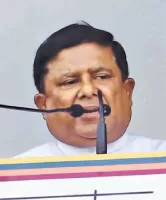
“In 1948, all political parties came together, just as today to achieve independence for the country, with every party playing a role in supporting Mr. D. S. Senanayake’s efforts. In a similar spirit of unity, both supporters and opposition parties have rallied behind President Ranil Wickremesinghe to help Sri Lanka navigate its current economic crisis.
“Over the past two years, President Wickremesinghe has introduced a record salary increase for the 1.5 million public servants. In addition, two million citizens have been granted freehold land rights, and 20 kilograms of rice have been provided to families struggling financially. These initiatives were not driven by public demand or election promises but were implemented to protect the people during the country’s bankruptcy. The President recognizes that the collapse of the public sector could trigger a broader economic downturn.
“Looking forward, plans are in place to add Rs. 25,000 to the salaries of government employees next year. Unlike other sectors that can adjust prices according to economic conditions, government employees depend entirely on their fixed monthly salaries, with no external mechanisms to increase their pay.”
Former Minister Harin Fernando said: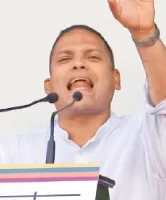
“Currently, 14 members of the Samagi Jana Sandhanaya have come together to support President Ranil Wickremesinghe’s victory. Since 1993, the UNP has not had a President elected. Therefore, the upcoming Presidential Election is crucial. We now have the opportunity to elect a UNP leader as President. President Ranil Wickremesinghe, a visionary leader who revived the UNP, has worked tirelessly to address the pressing needs and concerns of the entire nation.
“A country that was once in turmoil, where tourists were scarce, has been transformed into a nation where people can live and thrive today. This year alone, over 1.5 million tourists have visited Sri Lanka. Two years ago, some were demanding an election. Had an election been held then, the country would have faced economic and social ruin. However, within two years, the President strengthened the economy and created the stability needed for a Presidential Election. President Ranil Wickremesinghe is a strong and capable leader. With his leadership, we are confident in securing victory in the upcoming Presidential Election.
“President Ranil Wickremesinghe is the leader who saved the UNP when others had stepped away. Therefore, it is the party’s responsibility to ensure his victory. With the Gas Cylinder symbolically placed on the elephant’s back, we are determined to secure victory this time.”
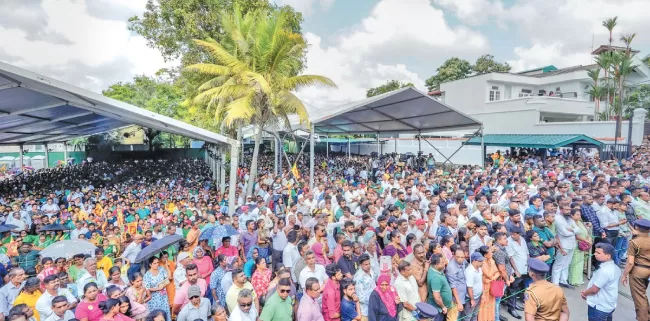
Pictures by Sulochana Gamage
The post President challenges Sajith, Anura to open discussion with IMF appeared first on DailyNews.