

Russia blocks UN Move to treat climate as security threat
UN: Russia on Monday blocked a United Nations Security Council draft resolution, under negotiation for many months, that for the first time would have defined climate change as a threat to peace.
The resolution, which enjoyed wide-ranging support, would have significantly expanded the criteria used by the most powerful UN agency to justify intervening in armed conflicts around the world.
Russia’s derailment of the measure underscored the challenges faced by the United Nations in uniting the global community to combat climate change, which Secretary-General António Guterres and others have called an existential threat.
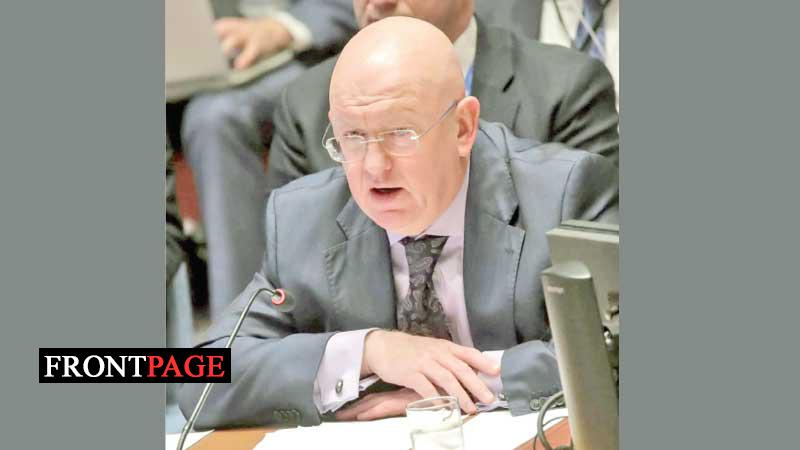
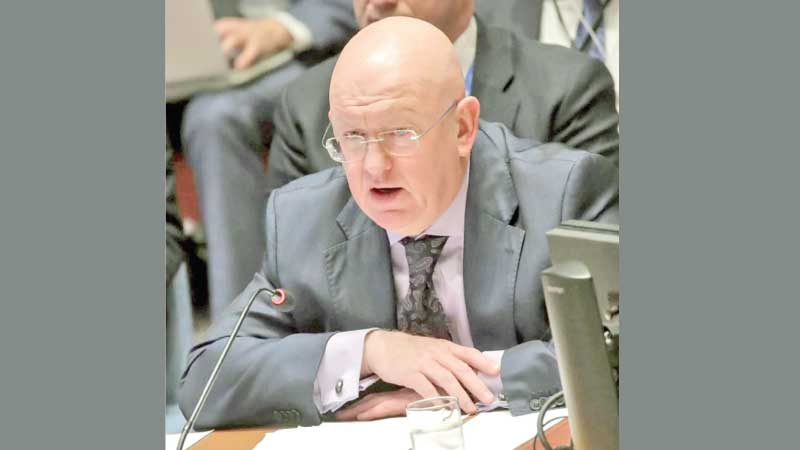
“We are against creating a new area for the council’s work which establishes a generic, automatic connection between climate change and international security, turning a scientific and socio-economic issue into a politicized question,” Russian Ambassador to the U.N. Vassily Nebenzia said just before casting his veto.
Twelve Security Council members voted to adopt the resolution Monday, while China abstained and India voted no.
Despite progress made to counter greenhouse gas emissions with an agreement reached at the U.N.-sponsored climate summit in Glasgow, Scotland, last month, that accord fell far short of what many scientists say will be required to curb rising temperatures and disastrous changes in weather patterns from a warming planet. Among other weaknesses, the agreement left unclear how the most vulnerable nations will be able to afford the enormous investments needed to adapt.
The possible role of climate change in armed conflicts has long been a subject of discussion at the United Nations and elsewhere.
Droughts and desertification aggravated by climate change in Mali, Niger and other parts of Africa, for example, are thought to be integral to the competition for water, food, farmland and pasture land that can lead to violence and instability.
The Security Council draft resolution, co-sponsored by Ireland and Niger, the council’s current president, was a version of what was initially proposed in 2020 by Germany but never put to a vote.
UN diplomats said at least 113 of the global body’s 193 members had supported the resolution, putting Russia in the position of having blocked what would have been a relatively popular decision. – THE INDIAN EXPRESS