

‘Sri Lanka’s debt crisis could spill over into banking crisis’
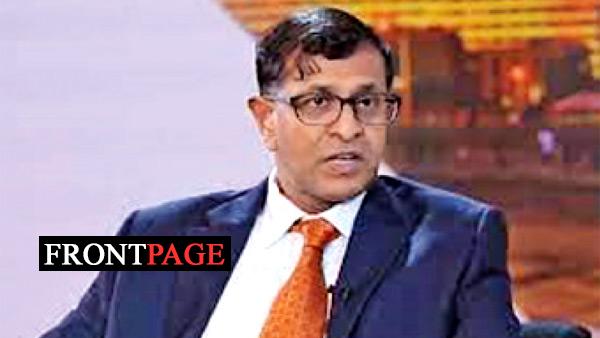

In the worst case scenario, it is possible that Sri Lanka’s debt crisis could spill over into a banking crisis which would hamstrung the recovery and bring terrible social consequences for the people of Sri Lanka, says Dr. Ganeshan Wignaraja.
Noting that an efficient financial system is the cornerstone of a vibrant economy, Dr. Wignaraja said that the bank-dominated financial system has come under stress due to ongoing debt and economic crisis.
“I recall that there are rising Non Performing Loans (NPLs) and debt levels and limited financial adequacy, overstretched State banks are particularly a problem,” Dr. Wignaraja , Senior Fellow National University of Singapore , Senior Research associate –Overseas Development Institute, told a seminar organized by Centre for Banking Studies.
Dr. Wignaraja said further that Sri Lanka needs to have comprehensive structural reforms alongside the IMF Programme and the key objective of these structural reforms should be to create a deep and comprehensive and efficient financial system, thereby immediately implementing an early warning system for the bank- dominated financial sector.
“We should really have some good indicators and improve the resourcing of the Central Bank for stress testing of commercial banks and Non- banking financial institutions, he noted.”
In addition, he stressed the need to have a mechanism for long-term development finance by creating a new development bank.
“I believe this could be done by merging the DFCC and the NDB and the government has leverage because it has shareholdings in both. This would create a better institution for financial inclusion with credit schemes for business startups, SMEs, women-headed entrepreneurs and all those important social things we want to do when recovery comes”.
Furthermore, Dr. Wignaraja said it is necessary to enact bankruptcy law like chapter 11 in the United States for non-financial firms. Otherwise we can have this knock-on effect through our financial system if we’re not careful. In addition it is imperative to accelerate the enactment of a new Banking Act.”
Noting that it is essential to introduce competition into the financial system by opening up to foreign banks and other financial institutions he added that this would encourage foreign investment in financial services in the port city which we hope will be a game changer for service sector transformation in Sri Lanka.
“Nevertheless we want to ensure that it doesn’t become a white elephant project. To do that we need to ensure that there can be free entry of foreign competition and foreign banks and foreign providers.”
He added that Sri Lanka must also ensure that the country has strong anti-money laundering legislation.
Moreover, he said Sri Lanka should take away key lessons from the Asian financial crisis of 1997 and global financial crisis.