

“They are running at a lower price than us”: story behind recent protests
Why commuters are choosing app-based rides over traditional three-wheelers
The claim is becoming familiar once again.
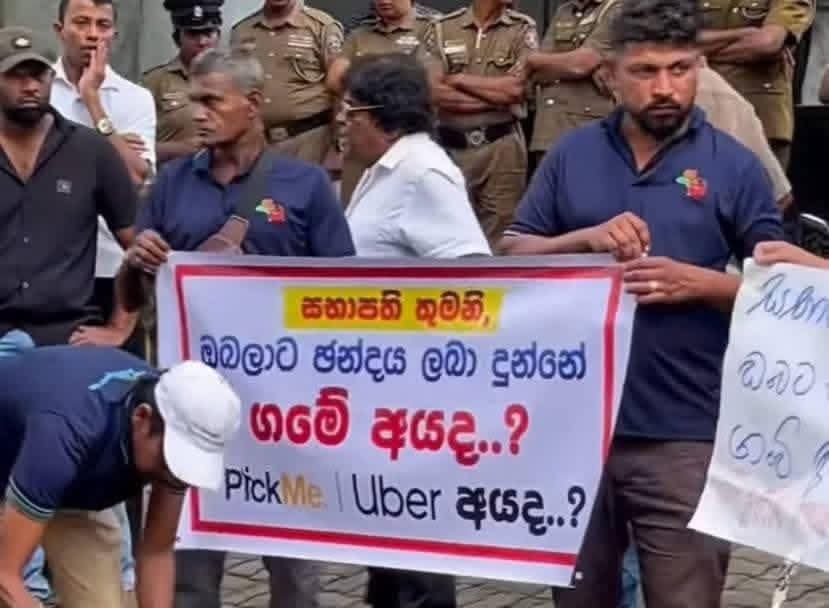
“They are running at a lower price than us, so we can’t survive,” sections of three-wheeler drivers say, as app-based passenger transport services continue to expand across Sri Lanka.
“They charge only Rs. 270 to go to Pidurangala through their app, while we have to charge around Rs. 800. As a result, foreign tourists are choosing to travel with them, and we are unable to survive,” a protester said.
In recent days, protests and complaints have resurfaced in several areas, with some three-wheeler drivers alleging that mobile app-based platforms are threatening their livelihoods by offering lower fares. The issue has also reached the Sri Lanka Human Rights Commission, following complaints by app-based drivers citing threats and intimidation.
However, commuter behaviour suggests that price alone may not be the defining factor behind the shift.
For years, the three-wheeler was Sri Lanka’s most widely used short-distance transport option, particularly in urban and semi-urban areas. It provided employment to thousands and offered door-to-door convenience at relatively low cost. Over time, however, passenger dissatisfaction steadily grew.
Common complaints included refusal to use meters, inconsistent fares for the same distance, sudden “special charges,” and reluctance to accept short trips. In tourist areas, incidents of overcharging and harassment were frequently reported, drawing criticism from both local commuters and foreign visitors.
It was against this backdrop that app-based transport services such as PickMe and Uber gained popularity. These platforms offered passengers upfront pricing, digital trip records, GPS tracking, and in-app complaint mechanisms. Riders could see the fare before confirming a journey and choose drivers based on ratings and availability.
In Colombo, Kandy, Galle and several other cities, commuters say predictability and accountability have been the main reasons for switching.
Passengers interviewed say that knowing the cost in advance, avoiding fare disputes at the end of a trip, and feeling safer during late-night travel are key factors influencing their choice. Many also note that app-based services reduce the need for negotiation, which had become a routine part of using conventional three-wheelers.
Three-wheeler driver groups, however, argue that app-based services benefit from pricing structures that are difficult to match. They point to commissions, promotional discounts, and algorithm-driven pricing as unfair competition. Some drivers insist that their operational costs cannot be covered if they attempt to match app-based fares.
Transport analysts note that app-based pricing is often driven by efficiency rather than undercutting alone. Route optimisation, reduced idle time, digital dispatch systems, and demand-based allocation contribute to lower per-ride costs.
Concerns have also been raised over incidents involving threats and violence against app-based drivers. Police records and media reports indicate multiple cases where drivers operating through mobile applications were allegedly intimidated or assaulted by rival groups. In some tourist areas, visitors have reported being discouraged or prevented from using app-based transport.
Authorities have repeatedly stated that any form of intimidation or violence linked to transport competition is illegal and will be dealt with under existing laws.
Meanwhile, commuter sentiment appears largely settled. Many passengers say they are unlikely to return to unregulated services unless issues related to pricing transparency, safety, and professionalism are addressed.
As Sri Lanka’s urban transport landscape continues to evolve, industry observers say the debate is no longer just about fares, but about service standards. With increasing smartphone penetration and consumer expectations shaped by digital platforms, the pressure is mounting on all passenger transport providers to adapt.
For commuters, the choice seems less about loyalty and more about reliability. (Newswire)
The post “They are running at a lower price than us”: story behind recent protests appeared first on Newswire.