


Dr. Coomaraswamy disagrees with negative int’l growth forecasts on SL
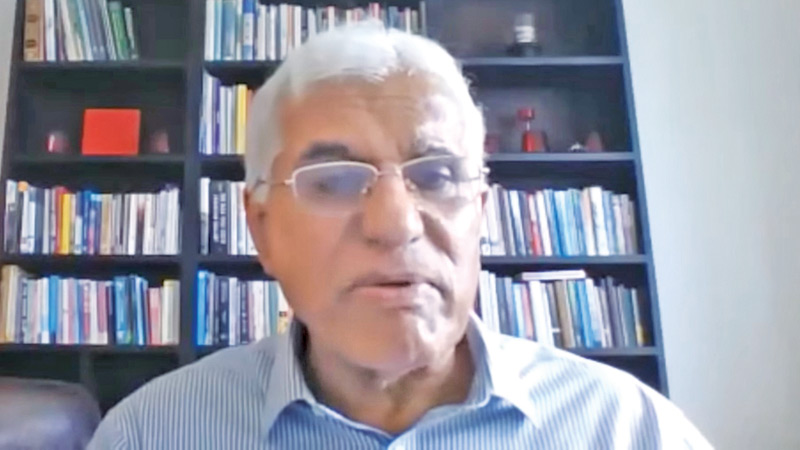

Former Central Bank Governor Dr Indrajit Dr. Coomaraswamy was dismissive of many local and international negative growth forecasts for Sri Lanka.
“I think we can outperform them. I know the global economy may not be as favourable as we’d like it to be but despite all that the advantages we have concerning both India and China alongside other tourism-linked gains are low-hanging fruit that can be leveraged.”
Dr. Coomaraswamy hinted as was the case last time issues of debt sustainability arose in the economy the political leadership opted for debt-to-equity swaps with China. He said, “From China what we need is not loans from them this time around but for them to deploy capital which they have plenty of. They and we need them to deploy Capital to leverage the infrastructure they’ve already built through loans. From Hambantota to Port City, the second round can have ways and means of ensuring that China invests to take advantage of the infrastructure they’ve already built.”
“The official statistics number suggest a 7.6% GDP contraction last year and that was a much better outcome than what was anticipated by the IMF and the World Bank.”
He said that the local community was the largest impacted by the economic crisis. He noted that even in the narrow remit of Net Present Value those holding LKR-denominated instruments had faced the largest haircut by way of inflation, additional taxes, and limited convertibility of their instruments. Dr. Coomaraswamy expected at the bare minimum the officials of the Central Bank to protect LKR-denominated instrumentation from the initial announcement of debt restructuring.
“One needs to take into account the fact that the domestic creditors have already taken a massive hit both through inflation and through depreciation of the currency. This is a very big hit. When we have our negotiations with other creditors the Central Bank is duty-bound to make that argument. The burden sharing should be done in a way that the existing hit that has been taken by the domestic creditors is built into the conversation.”
He was speaking on March 24 at a Centre for Banking Studies webinar on ‘What is next for Sri Lanka in the wake of the IMF Programme’.
In the unlikely event that domestic debt restructuring is forced on the local public, there would have to be regulatory and standard modifications to allow space for the domestic creditors to absorb the effects. Dr Coomaraswamy acknowledged the high-interest premium between government securities and market instruments.
“Regarding the risk premium built into interest rates, my understanding is that the governor and the Secretary to the Treasury will be speaking on some of these issues next week so I hope there will be more clarity next week.”
Dr. Coomaraswamy was dismissive of monetary-linked stimulus programs. He noted that the new legal framework would prevent the Central Bank from engaging in policy that had been followed in the West creating huge fissures in their economies. He said the post-2008 financial crisis had encouraged households to get into indebtedness and that had now come to ‘boomerang’ on them causing huge divisions in society. (TP)