


New bill proposes allowing witnesses to give evidence in Sri Lankan courts from overseas via video link
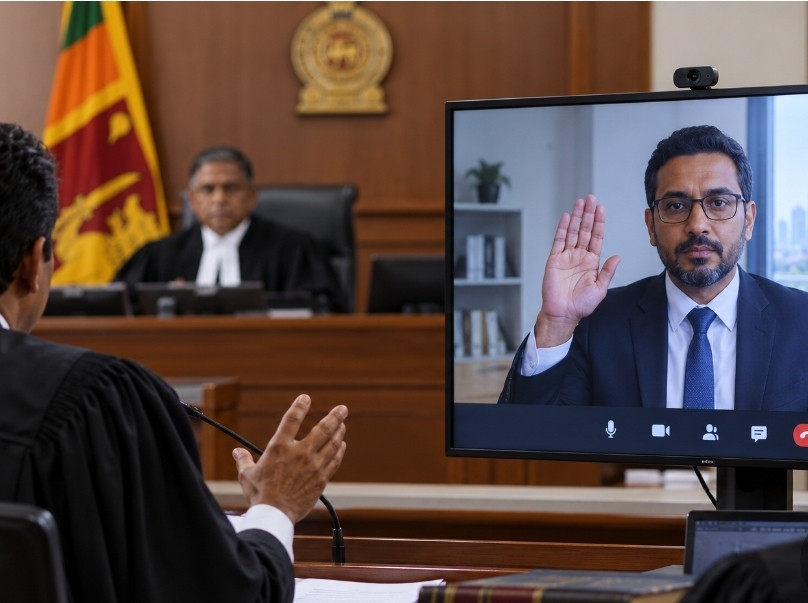
The Sri Lankan government has published a bill to amend the Civil Procedure Code, allowing witnesses to give evidence before courts through live audio-visual technology from locations within Sri Lanka or overseas.
The Civil Procedure Code (Amendment) Bill, published in a Gazette supplement dated October 16, 2026, was ordered to be published by the Minister of Justice and National Integration.
Under the proposed legislation, courts will be empowered to permit witnesses to testify remotely through video links, either with the agreement of all parties, following an application by one party, or on the court’s own initiative.
However, courts must consider objections raised by the parties or witnesses and ensure that remote testimony does not undermine the fairness of judicial proceedings.
The bill also introduces provisions allowing witnesses residing overseas to give evidence without travelling to Sri Lanka.
In such cases, courts may appoint diplomatic officers attached to Sri Lankan embassies, high commissions or consulates to coordinate the examination of witnesses.
Where diplomatic representation is unavailable, other qualified persons, including legal practitioners or notaries, may be appointed.
The proposed legislation also allows courts, under specified conditions, to permit overseas testimony without appointing a commissioner, provided adequate safeguards are in place.
Special arrangements are proposed for witnesses unable to attend court due to illness or physical limitations, allowing evidence to be recorded from their homes or other locations.
The bill further introduces safeguards concerning witness identification, confidentiality, electronic recording of evidence and the prevention of unauthorized recordings.
Evidence given remotely would carry the same legal standing as testimony delivered physically in court, including the application of laws relating to perjury and contempt of court.
Courts would also have the authority to suspend or reschedule proceedings in the event of technical failures affecting video connections.
The proposed amendments are intended to facilitate the examination of witnesses through modern communication technology while maintaining existing judicial procedures and protections.
The legislation remains a bill and will require parliamentary approval before becoming law. Its substantive provisions would take effect on a date subsequently appointed by the minister through a Gazette notification. (Newswire)
The post New bill proposes allowing witnesses to give evidence in Sri Lankan courts from overseas via video link appeared first on Newswire.